
Get your daily news on travel and tourism
Provided by AGP
Park Hotel Tokyo Launches 'Sushi☆Wonderland' Artist Room as Part of Its Ongoing Art Project
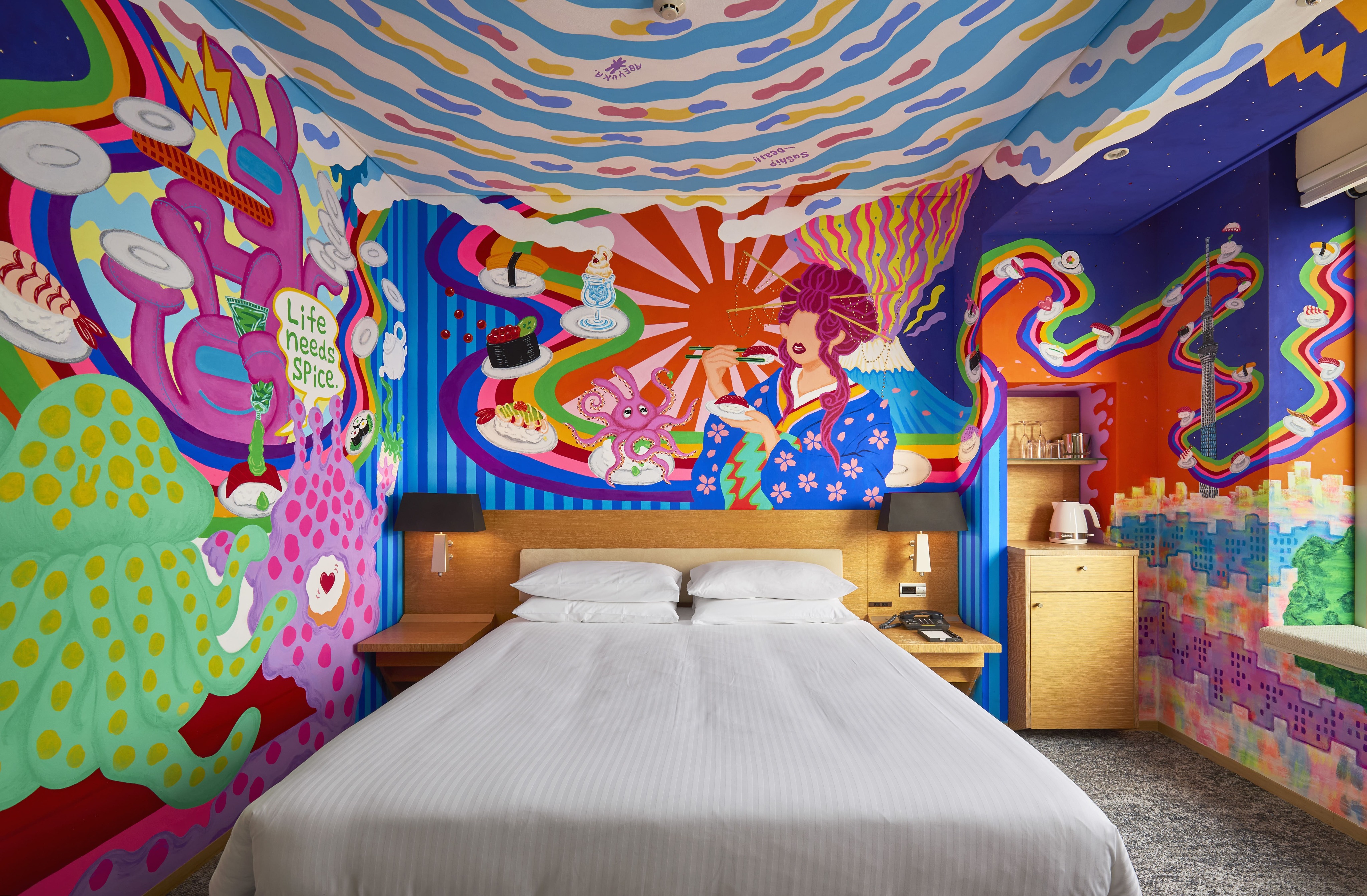
An immersive space where sushi, time, and Japanese passion intersect, created by ABEYUKA.: “Sushi☆Wonderland.”
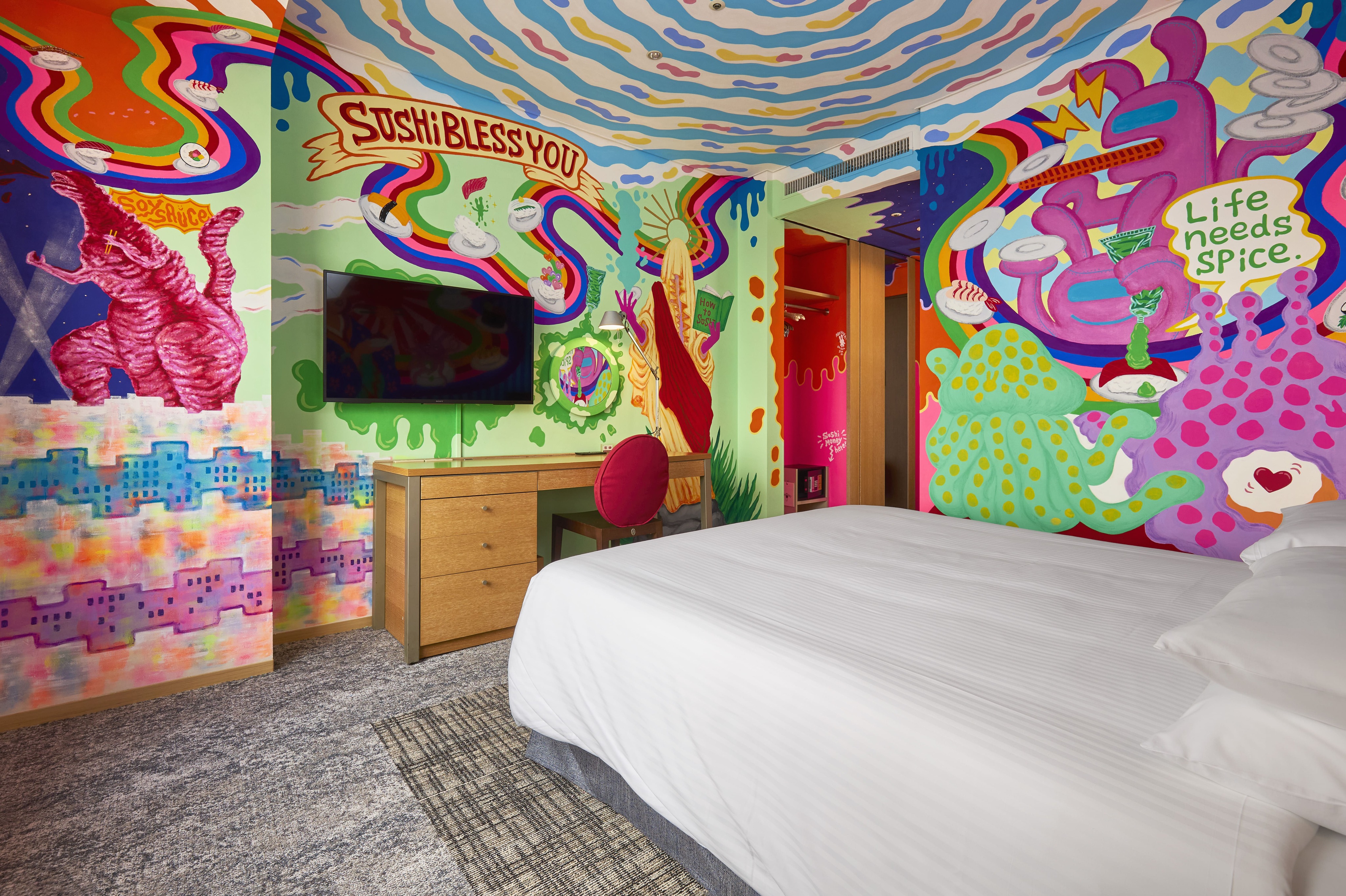
Stories of sushi culture unfold across four walls along a timeline of eras.
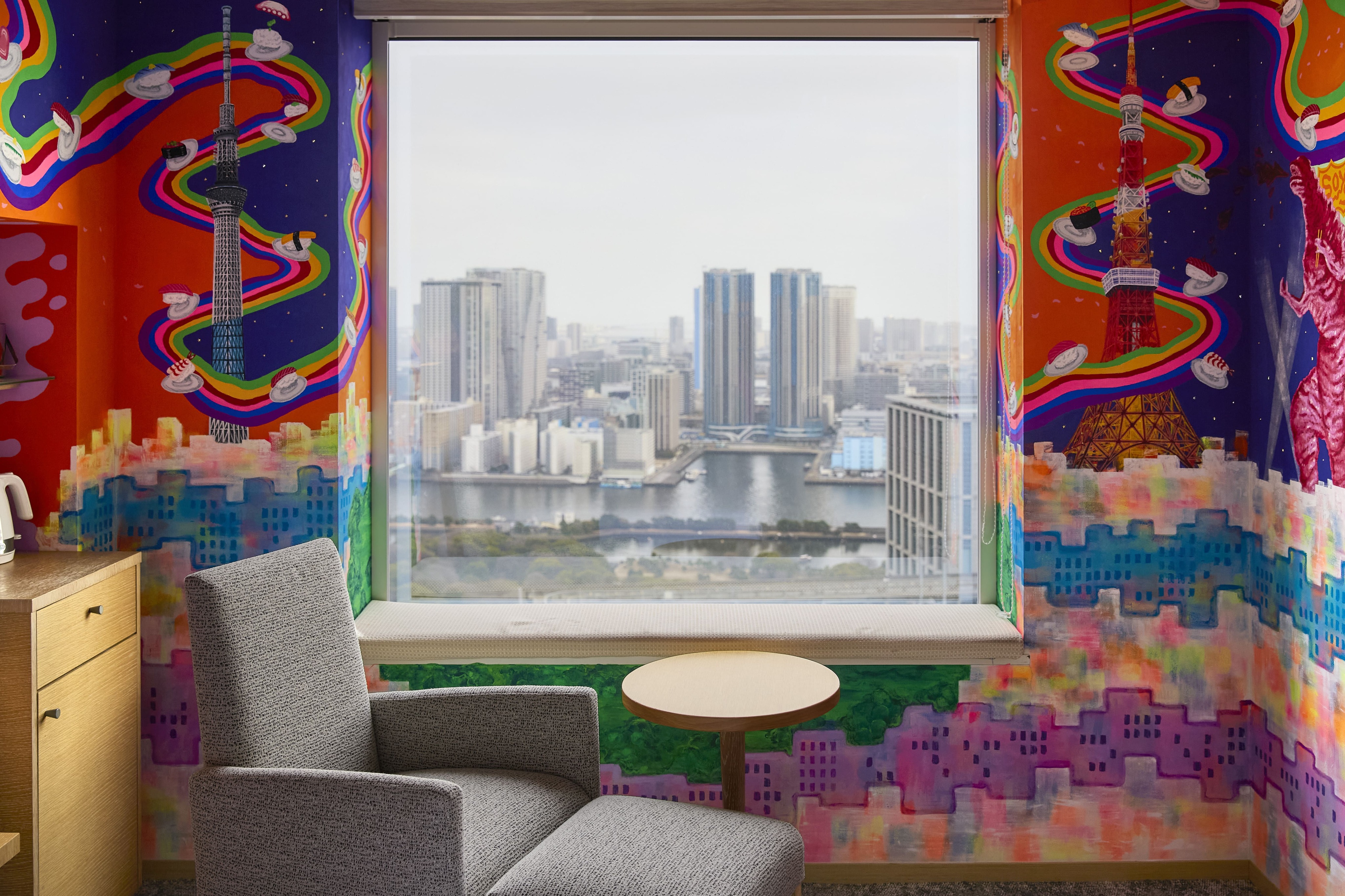
Interior artwork merges with the view of Hamarikyu Gardens outside the window.
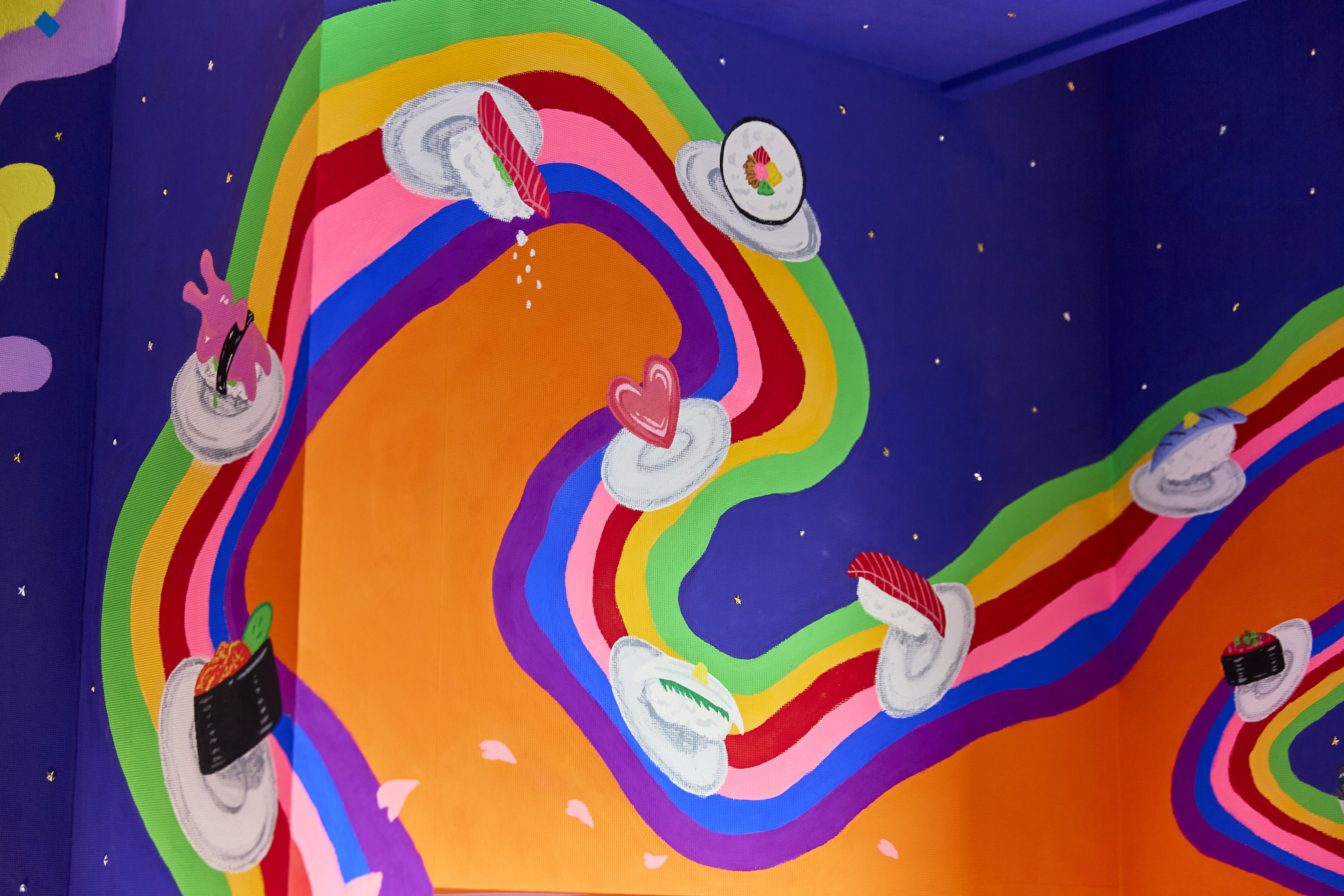
A spatial design layering structural order of straight lines and right angles with expressive curves and color.
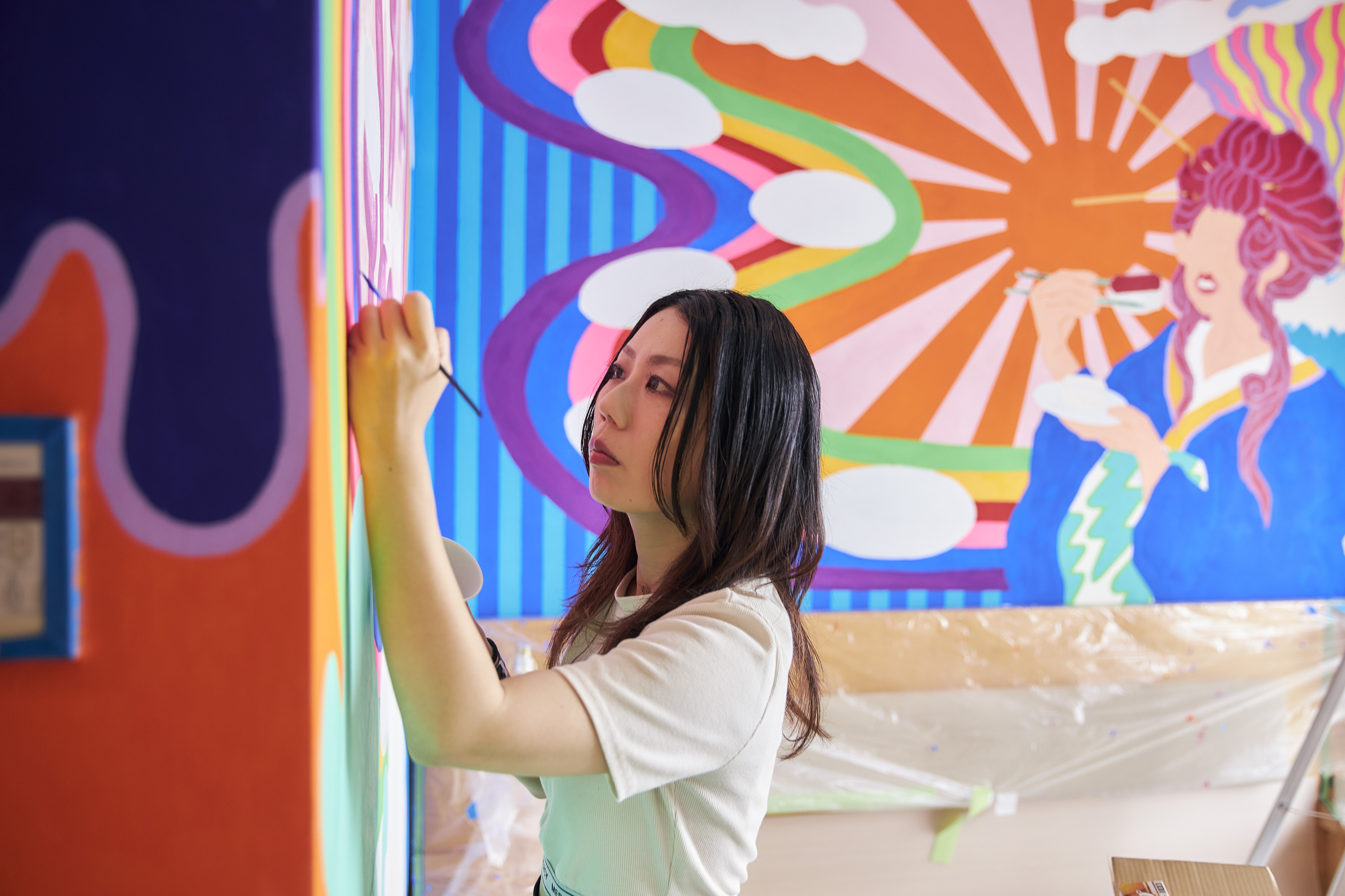
ABEYUKA., the artist behind “Sushi☆Wonderland.”
Shiba Park Hotel has launched the 52nd installment of its Artist Room project, with guest rooms designed to be experienced as a single integrated artwork.
MINATO-KU, TOKYO, JAPAN, May 6, 2026 /EINPresswire.com/ -- Park Hotel Tokyo (Shiba Park Hotel Co., Ltd.; Headquarters: Minato City, Tokyo; President and CEO: Noriyoshi Tanaka) has begun sales of the Artist Room “Sushi☆Wonderland,” available from April 15, 2026. The work was created by artist ABEYUKA., and the room is themed around “Sushi,” “time,” and “Japanese passion.” A rainbow encircling the entire room represents a conveyor belt sushi system, where sushi figures appear to travel through time and space.
The origin of Japanese sushi culture lies in “Nigiri Sushi,” which maximizes the natural umami of ingredients. Its minimal aesthetic, achieved by eliminating excess, reflects the essence of Japanese sensibility. In this room, the philosophy of Nigiri Sushi expands from the Edo period into the future and even into mythological time.
Wall Narratives Encircling the Room Across Different Eras
The wall behind the bed depicts Edo in the 1820s, when Nigiri Sushi first emerged. The side walls present a near-future scene where robots serve Sushi to extraterrestrials. The foot of the bed shows an ancient world where the Sushi god may have created Sushi through magic, while the window-side wall illustrates the present day.
Godzilla exhaling soy sauce, Tokyo Skytree, and Tokyo Tower are depicted, seamlessly connecting with the view of Hamarikyu Gardens outside the window. This composition blurs the boundary between the interior and the real world.
Order and Freedom in Space and Color
The spatial design incorporates elements inspired by Antoni Gaudí and Ludwig Mies van der Rohe. The linear and right-angled structures associated with Mies represent order derived from human intention and rationality. In contrast, Gaudí’s organic curves symbolize freedom and vitality drawn from nature.
ABEYUKA. designed the space to exist between these two philosophies, layering free-flowing curves and color expression over a structured foundation to create a balanced environment for comfort.
A series of visual techniques were also applied to ensure a spacious and comfortable perception of the richly colored room.
Spatial Reconstruction: Eliminating Boundaries
• Loss of corners: Painting across walls removes visual corners and reduces confinement
• Circulating gaze: Continuous storytelling across all walls expands perceived space
• Expanded sightlines: Window artwork blends into exterior scenery, dissolving indoor/outdoor boundaries
• Depth illusion: Variation in density creates perspective beyond actual dimensions
Color Design: Reducing Visual Pressure
• Unified tone: Harmonized mixing maintains clarity within a colorful space
• Diagonal color placement: Guides visual flow across the room for spatial depth
• Open ceiling design: Light pastel tones enhance openness and perceived height
The Spirit Behind Conveyor Belt Sushi
In the 1950s, while the world pursued mass consumption and speed, Japan developed a different concept: moving Sushi itself. The invention of conveyor belt sushi placed Sushi on an automated belt, delivering it directly to customers.
ABEYUKA. describes this invention as a reflection of Japanese ingenuity—serious, hardworking, and uniquely unconventional. The Artist Room was created from admiration for this distinctive cultural spirit, offering a surreal and layered Sushi world experience.
ABEYUKA. Artist Profile
Graduated from the Oil Painting Department, Faculty of Fine Arts, Tokyo University of the Arts, and completed graduate studies at the same institution. Her practice spans oil painting to large-scale balloon installations, exploring themes of desire and existential essence.
Selected as a Ministry of Cultural Affairs Agency for Cultural Affairs (Japan) New Artist Overseas Training Program participant in New York (2015–2022). Awards include the Special Prize at The 20th Taro Okamoto Award for Contemporary Art, Holbein Scholarship, and Koji Kinutani Award at the World Painting Grand
Prize Exhibition.
Active across Tokyo, New York, and Taiwan, expanding her global artistic presence.
Career
2009: Graduated Tokyo University of the Arts, Oil Painting
2011: Completed Master’s Program, Tokyo University of the Arts
Awards
2009 / 2013: Selected, Independent Exhibition
2010 / 2013: Mitsubishi Tokyo Art Gate Program (selected / purchased / exhibited)
2011: Tokyo Wonder Wall selected
2012: TWS-Emerging selected / solo exhibition
2013: Koji Kinutani Award, World Painting Grand Prize Exhibition
2017: Special Prize, The 20th Taro Okamoto Award for Contemporary Art
Fumiko Kitao
Shiba Park Hotel Co., Ltd
pr@shibaparkhotel.com
Legal Disclaimer:
EIN Presswire provides this news content "as is" without warranty of any kind. We do not accept any responsibility or liability for the accuracy, content, images, videos, licenses, completeness, legality, or reliability of the information contained in this article. If you have any complaints or copyright issues related to this article, kindly contact the author above.
